The Exposure Triangle
Apr 15, 2026The Exposure Triangle
Exposure Definition
To understand the exposure triangle, you must know what exposure is. The good news is that you already do! ‘Exposure’ is another word for ‘brightness.’ You already can look at a picture and tell if it’s too bright or too dark. It’s awesome when you find out you had a skill you didn’t realize you had!
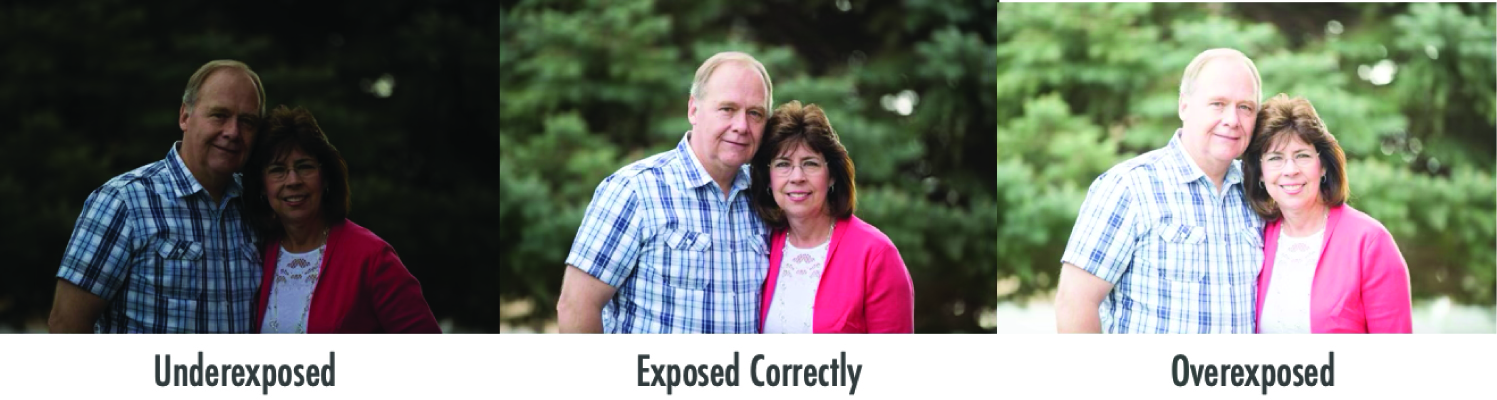
As you looked at each of these three pictures, you already knew which one was too dark, too bright and just right. Why? Our eyes are already tuned to know what looks normal.
Remember the terms:
- Underexposed = too dark
- Overexposed = too bright
- Correct Exposure = good brightness.
Three Settings Affect Exposure
There are three camera settings that affect the exposure of the image:
- F-Stop
- Shutter Speed
- ISO
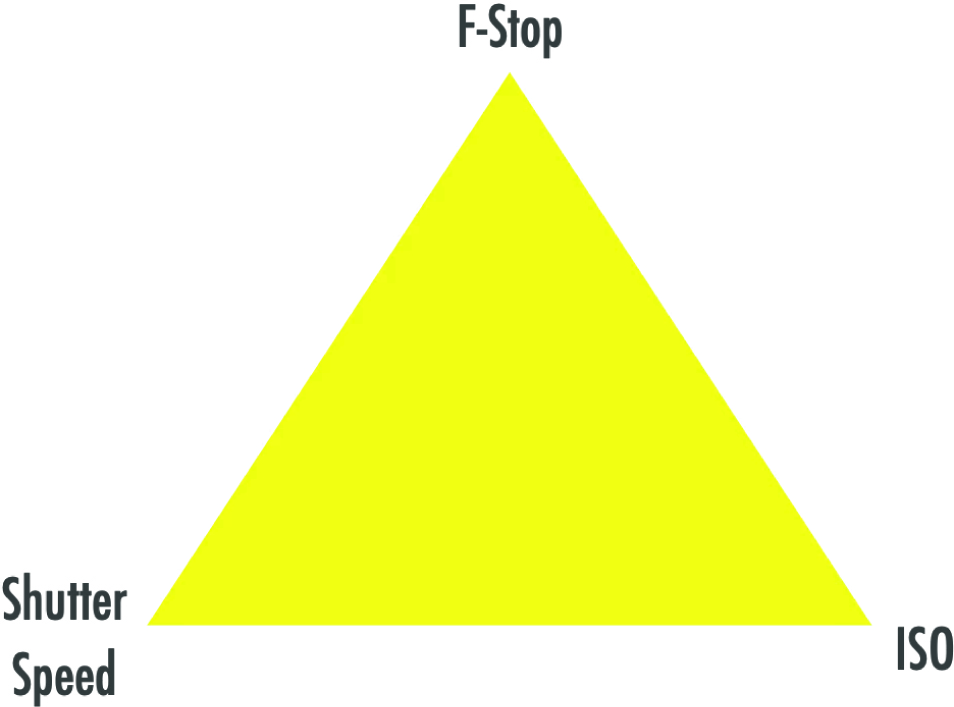
These three settings make up the ‘exposure triangle.’ The triangle shape is to help you remember that there are three. I was thinking I could use the ‘Three Stooges’ of exposure but that seemed more confusing. Here’s a brief summary of how each setting will affect your image. We’ll cover these more thoroughly in future sections but here’s an introduction.
F-Stop
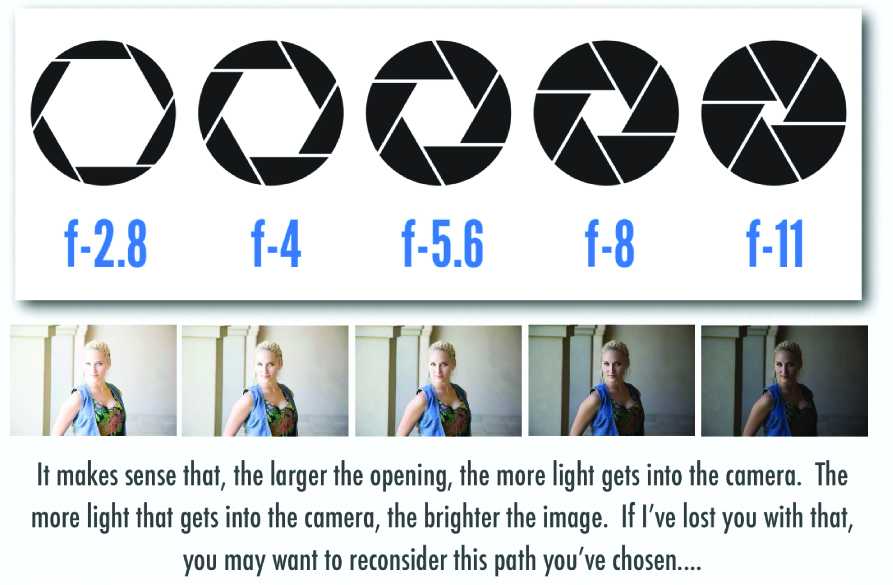
The f-stop controls the size of the lens opening (hole) when you take a picture. Change the f-stop, and you’ll change how much the lens opens. As you might expect, this opening affects how much light flows into the camera through the lens. The last part is going to blow your mind: the more light that enters the camera makes the image BRIGHTER! I’m serious.
We’ll cover this thoroughly in the next chapter. For now, just burn it into your mind that the f-stop controls how light or dark and image is by controlling the size of the opening. One principal worth mentioning because it’s confusing: a LOWER f-stop will give you a BIGGER opening. It’s the opposite of what you would predict. Yep. The creators of the f-stop thought they would just mess with you. They hated people.
Shutter Speed
Shutter speed also affects how much light gets into the camera. It does this by controlling how long the shutter (door) stays open when you take a picture. Again, hopefully that makes perfect sense to you. If leave the shutter open longer, more light will flow into the camera. Remember when you would get yelled at for leaving the door open? Your mom was upset because you were letting MORE hot or cold air into the house. Or was it ‘out of the house.’ I can’t remember. It’s probably why I kept leaving the door open. Bad training mom.
The shutter speed is a fraction.
The shutter speed is represented usually by a fraction. This is a fraction of a second. For those of you who haven’t thought about fractions in a while, think of a fraction as how much of a pie you would eat.
The point is that, the LARGER the denominator (1/125), the fraction is actually SMALLER. The smaller the fraction, the smaller the piece of pie. They said in school that fractions would be important later. Welcome back to fractions! Photographers love math.
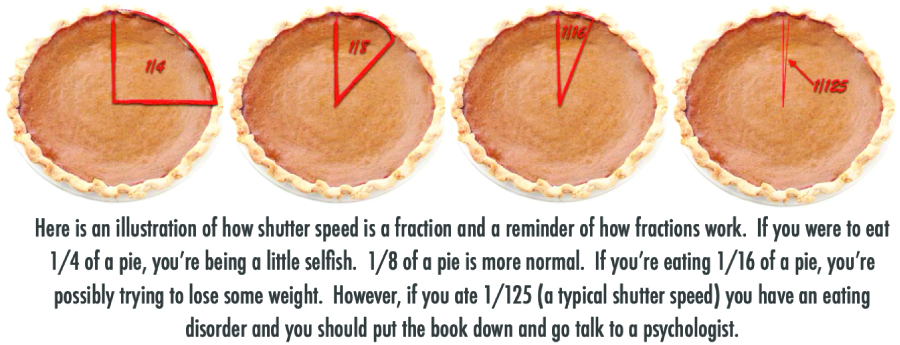
It works exactly the same way with time. Again, imagine that the pie is a second. 1/125th of a second is a much smaller time than 1/8th of a second. In other words, 1/125 is a smaller fraction than 1/8th. So, the SMALLER the fraction, the SHORTER the amount of time the shutter is open. If that’s confusing, really stare at the pies. It’ll clear up.
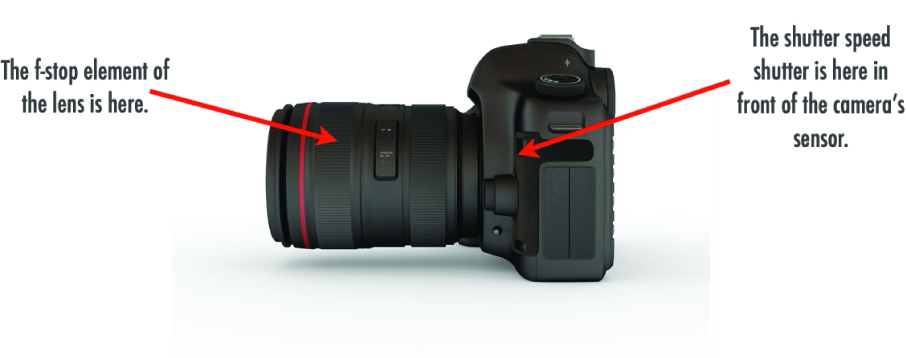
The shutter is in the camera body right in front of the sensor. This means there are TWO devices that open when you take a photograph: the lens (f-stop) and the shutter (shutter speed). Fun fact.
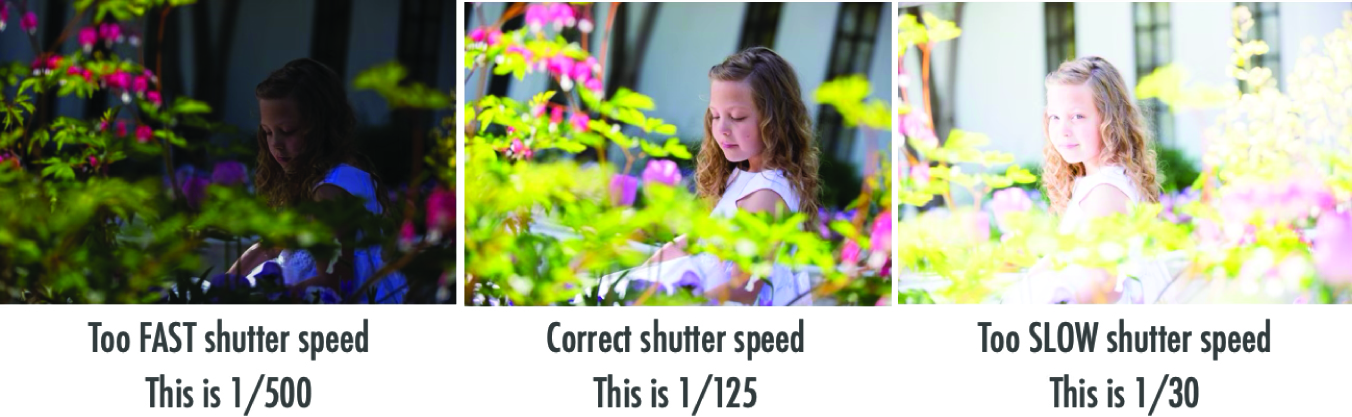
When you have a SLOWER shutter speed, the picture is BRIGHTER. Why?
- If your shutter speed is slower, that means it’s staying open longer.
- If it’s open longer, the picture will be brighter.
If your shutter speed is FASTER, the picture is DARKER.
- If your shutter speed is faster, that means it’s staying open shorter.
- If it’s open shorter, the picture will be darker.
That might be a little tricky to get your head around because of the term ‘shutter speed.’ A more appropriate name would be ‘how long the shutter stays open when taking a picture.’ I guess they couldn’t fit that on the camera.
ISO
ISO is a measure of how sensitive your camera’s sensor is. Every camera has a sensor. This sensor is what absorbs the light entering the camera and makes an image out of it. It can sense the brightness and color of light - like our eyes do.
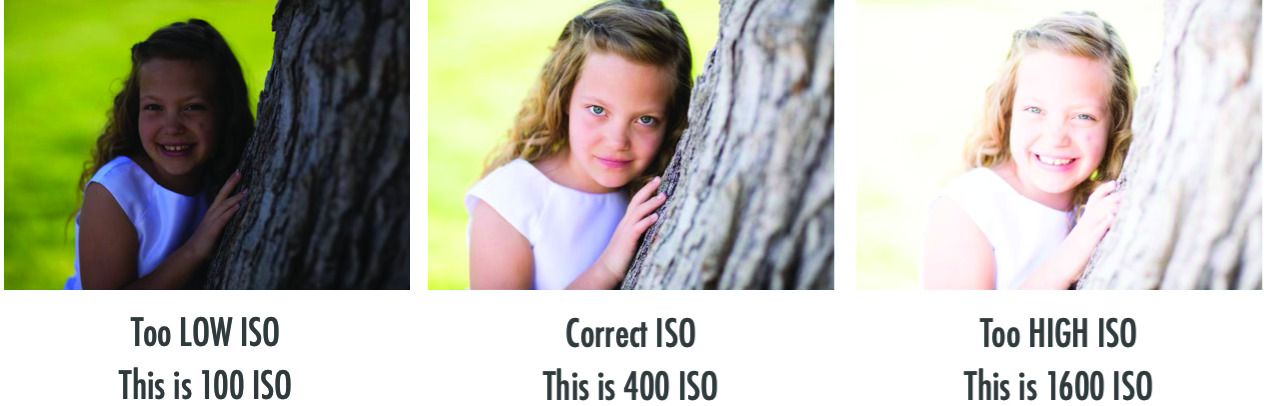
The HIGHER the ISO, the MORE sensitive your sensor is. Think of a high ISO as a woman - it’s more sensitive. I’m totally kidding of course.
The LOWER the ISO, the LESS sensitive your sensor is.
Cameras are getting more and more sensitive to light. Just like women are becoming more and more sensitive. Kidding again. Sometimes, they are insensitive. Especially when they turn down your invitation to homecoming. Yes, I’m talking to you Lisa.
Exposure Triangle
The exposure triangle is a combination of the three key elements we’ve been discussing: f-stop, shutter speed and ISO. Each one affects exposure in their own way:
- F-Stop: Controls how much the lens opens.
- Shutter Speed: Controls how long the shutter stays open.
- ISO: Controls how sensitive the sensor is to light.
The point I’m trying to make is that all three control how bright or dark your picture is. One setting can ‘balance’ another. For example, if you want a low f-stop, you might have to compensate with a faster shutter speed. Or, you may need the exact shutter speed and f-stop, but the exposure is dark. You would have to increase the ISO to increase the exposure.